
Social Workers as Writers: An Interview with Adam McCormick, MSSW, PhD
I’m so thankful for social workers who share their expertise with the world through their books.
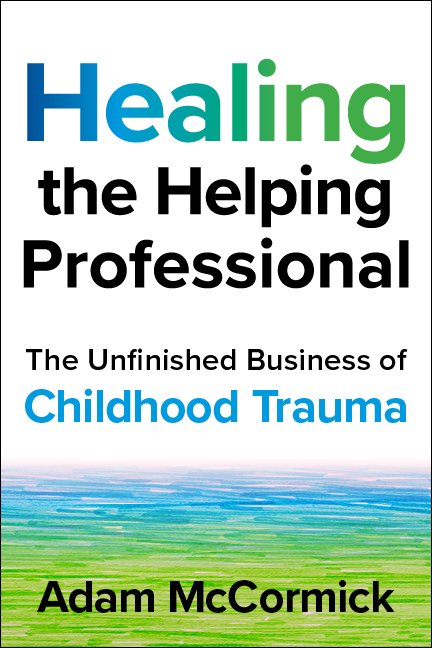
Adam McCormick, MSSW, PhD is the author of Healing the Helping Professional: The Unfinished Business of Childhood Trauma (NASW Press, 2026) and is a professor of social work at St. Edward’s University in Austin, Texas.
I love the idea of reframing "hurt people hurt people" to "hurt people help people," because I know it's true! How can this idea help BSW and MSW students to understand the legacy of trauma in their own professional and personal lives?We have some really sophisticated frameworks for understanding how people who have been hurt can develop narratives, adaptations, and behaviors rooted in that harm. What we have spent far less time understanding is the much more common reality that hurt people often become helpers.
Many people enter social work because, somewhere along the way, they developed capacities that helped them survive difficult experiences. They learned how to read a room, anticipate another person’s emotions, calm a crisis, care for other people, notice suffering, or confront injustice. Those capacities can become extraordinary professional strengths.
But they can also come with a cost. If I learned very early that my safety or belonging depended on taking care of other people, then something as seemingly simple as setting a boundary may not feel simple at all. It may feel dangerous. Telling a social worker to “practice self-care” or “set better boundaries” without helping them understand why those things are difficult can become almost meaningless.
Understanding our own stories helps us understand why we entered this work, how the work affects us, and what real care for ourselves actually requires.
Who is the target audience for this book? Is it just for social workers?
Not at all. The book is really for anyone doing helping work. I interviewed social workers, psychologists, chaplains, immigration attorneys, educators, and people working in other helping professions. What connected them was not a particular credential. It was the experience of entering work that requires us to continually encounter other people’s pain, vulnerability, grief, and crisis. The book asks what our own histories bring into those encounters and how we can do this work in ways that are more sustainable, authentic, and relational.
I know that social work students are sometimes given the advice that they need to heal or complete their own recovery work before they help others. What do you think about this advice?
I absolutely believe social workers need to engage in their own healing and authenticity work. What concerns me is how often the profession tells people to “do the work” without ever explaining what the work actually is. It is irresponsible and reckless. It does not matter whether I am talking with first-year students or social workers who have been practicing for thirty years. I repeatedly hear that they have never had a meaningful professional conversation about their own childhood experiences, the adaptations they developed, or how those experiences show up in their work.
We make passing comments about self-awareness, countertransference, boundaries, or self-care, but we rarely provide meaningful frameworks for understanding them. I think that is one of the profession’s great failures. We ask people to enter deeply relational work while giving them very little language for understanding the person they are bringing into the room.
How should social work supervisors think about "hurt people help people" throughout the clinical supervision process?
Supervision is one of the best opportunities we have to do this work. Supervision should not simply be a role in which someone checks documentation, reviews cases, and makes sure policies are being followed. It should be a process where supervisees can become increasingly curious about the stories and adaptations they bring into their work.
A supervisor can help someone notice, for example, why a particular client activates an unusually strong need to rescue, why conflict feels intolerable, why saying no feels threatening, or why a client’s rejection feels so personal.That does not mean turning supervision into therapy. It means recognizing that the worker is part of the helping relationship and that understanding ourselves more deeply makes us better practitioners.
As a dialectical behavior therapy clinician, I have so many examples of how traumatic experiences can sometimes be a springboard to what DBT calls a "life worth living." I assume you must see similar stories when you are working with students.
Absolutely. On the first day of class, I often ask students why they chose social work, with one caveat: they cannot simply say, “because I want to change the world.” Once we get beneath that answer, students almost always talk about meaning, purpose, connection, or some experience that made them want to become the person they once needed.
The tragedy is that social work education often does not help students fully recognize the meaning already present in the work they do. Social workers help people heal wounds, keep families together, confront injustice, support people through unimaginable moments, and transform systems. Yet many practitioners never develop the ability to accurately recognize the impact they are having. Part of sustaining a life in this profession is learning to actually see the meaning in the work, not just the suffering.
How can social work students prepare themselves to work with clients who have experienced trauma? Is it enough to know what kinds of evidence-based treatments may be effective?
No, I do not think it is enough. Evidence-based interventions matter, but trauma is not simply a collection of symptoms that we apply techniques to. Trauma is a wound, and one of the most important parts of that wound is the meaning a person makes from what happened. A child who is abused may come to believe, “I am unlovable.” Someone who is abandoned may decide, “People always leave.” Someone who has repeatedly been harmed may conclude, “The world is not safe.” Those narratives can organize a person’s relationships and identity for years.
Our greatest power as trauma-informed practitioners is our power to help people transform the meaning they have made from painful experiences and relationships. That requires evidence, certainly, but it also requires curiosity, relationship, safety, and the ability to stay with someone long enough for a different story to become possible.
What knowledge gaps still exist when we think about how social workers may be impacted by the trauma of their work?There are so many. We know a great deal about secondary traumatic stress, compassion fatigue, and burnout, but we know much less about why the same work affects different people so differently.
One area I think deserves much more attention is the interaction between a social worker’s early life experiences and the trauma they encounter professionally. Research in other high-exposure professions suggests that earlier trauma can shape vulnerability to later traumatic stress. I think we need much more social work research asking similar questions. What happens when a person who learned as a child to rescue everyone becomes a child protection worker? What happens when someone who survived chaos enters a profession organized around crisis? What happens when the very capacities that made someone an exceptional helper are also the capacities that make it difficult for them to stop helping? Those are questions we have barely begun to examine.
What do you wish someone had shared with you about how "hurt people help people," when you were a younger social worker?
As a man, I wish someone had helped me recognize that some of the capacities I developed very early in life were not simply liabilities. They were strengths. As a child, I often found myself functioning almost like my father’s miniature social worker. I learned how to read emotions, calm crises, sit with people in pain, anticipate what someone needed, and confront things that felt unjust. No one ever said, “Those capacities matter. They may someday shape the work you are called to do.” I wish someone had helped me recognize those strengths while also helping me understand the cost of developing them so early. Both things can be true. Something can emerge from pain and still become a gift.
What was the process of writing this book like for you?
It was intense because so much of my own story is woven through the book. There were periods when I wrote almost feverishly because something had become clear to me and I needed to get it onto the page. There were other times when I had to put the manuscript away for months because I simply was not ready to keep going. There were also countless moments when something would come to me while driving and I would pull over to jot it down. Writing the book became part scholarship, part storytelling, and part reckoning. I was asking other helping professionals to examine their unfinished business while having to continually confront my own.
What advice do you have for social work students and recently graduated social workers who want to write?
Please write!
Social workers have an extraordinarily important perspective on the world, and I wish we heard more of those voices outside of academic journals and professional spaces. We sit with people during some of the most vulnerable moments of their lives. We see how systems actually affect people. We witness resilience, injustice, grief, love, failure, repair, and transformation every day. Writing can also be incredibly liberating. It has given me a way to understand my own experiences and to turn things I have witnessed into something that might help someone else. You do not have to wait until you consider yourself an expert. Your perspective matters now.
What are you currently reading or listening to this semester?
Most of my reading right now is connected to a new book project I am working on about boys, masculinity, and disconnection from self. I am particularly interested in how boys learn which parts of themselves are safe to reveal, how they adapt to expectations around masculinity, and what those adaptations eventually cost them in their relationships, emotional lives, and sense of self. So I have been spending a lot of time reading and thinking about boyhood, shame, belonging, emotional development, masculinity, power, and the ways boys find their way back to connection.
Congratulations, Dr. McCormick!
You can find Dr. McCormick’s book through NASW Press and Amazon.com.