
I’m so thankful for social workers who share their expertise with the world through their books.
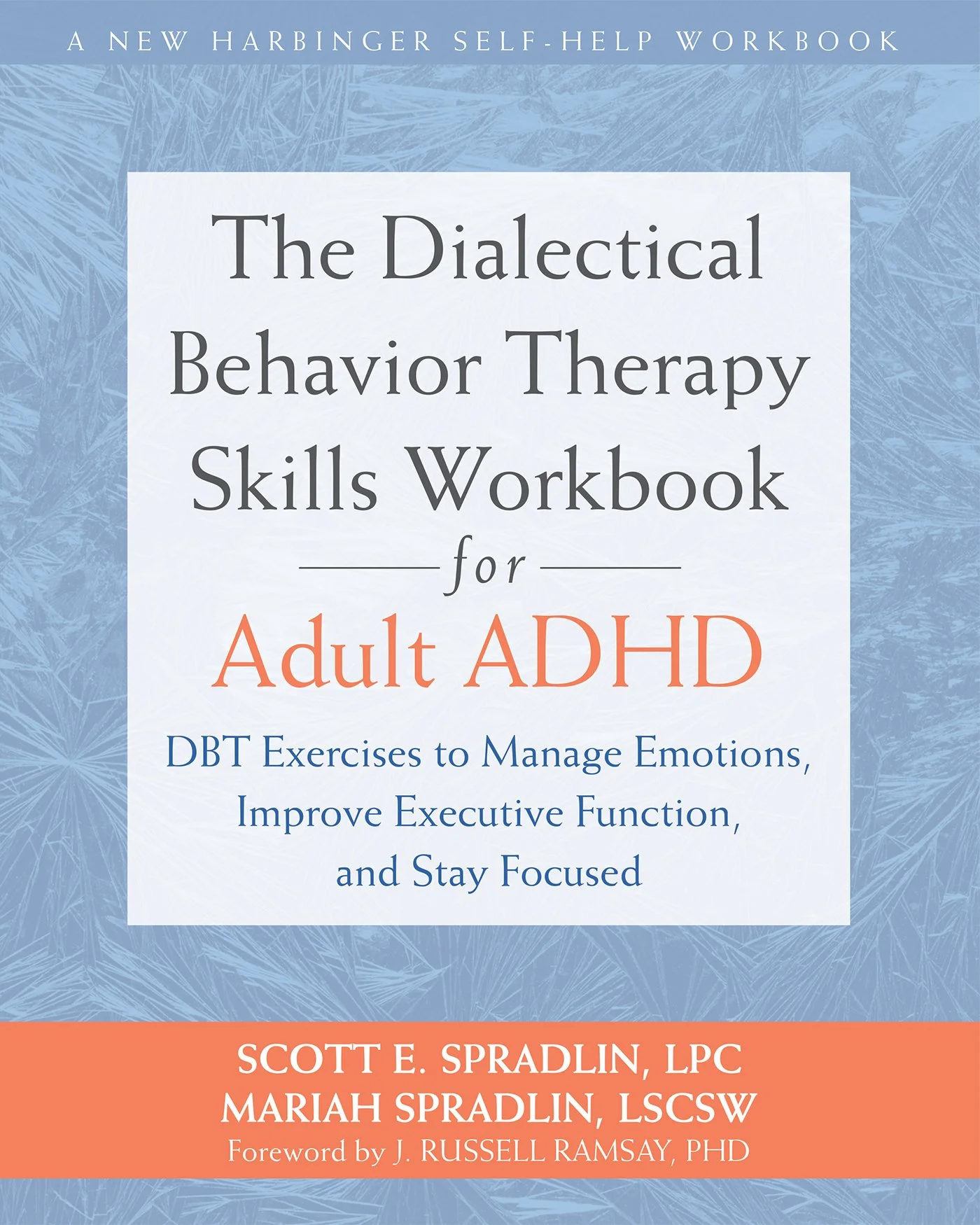
Mariah Spradlin, LSCSW, LCAC is the co-author of The Dialectical Behavior Therapy Skills Workbook for Adult ADHD. Mariah and her husband, Scott, have a private practice at NorthStar Therapy in Wichita, Kansas.
How long have you been practicing DBT?
I completed my B-Tech DBT Intensive Training in September 2023, so it has been over three years. It actually feels like it has been longer than that. Maybe that is because of the approximately 16 months of intensive training.
When most people think about DBT, they imagine a treatment for borderline personality disorder. What can DBT offer individuals with ADHD?
There are many things DBT can offer individuals with ADHD, including many of the same benefits that are helpful for people with borderline personality disorder or borderline personality traits. DBT is a Life Worth Living model that focuses on helping people navigate and experience life’s challenges while participating in their lives effectively through the use of DBT skills.
For adults with ADHD, this may mean increasing effective problem-solving skills to navigate ADHD-related challenges while learning to tolerate discomfort without making situations worse through emotional or behavioral impulsivity, which often creates additional problems for themselves and others. DBT also teaches adults with ADHD how to pay attention through its core mindfulness skills, helping to increase mindfulness while decreasing automatic, mindless behavioral patterns that can lead to ineffective reactions rather than thoughtful responsiveness.
What are some of your favorite DBT skills?
Oh, this is a hard one! Every time we teach a DBT module, I tell our participants that this module is my favorite. (Haha!)
Core Mindfulness is a given. It is the fundamental set of skills that allows all the other DBT skills to come alive in the moment. Without those skills, I would not be effective in choosing which skills to use, when to use them, or how to make them work.
Then there is the second part of Distress Tolerance: Reality Acceptance Skills, particularly Radical Acceptance and Willingness. I view these as another set of basic and foundational skills that must be present for other DBT skills to be effective. They are not easy skills for most of us, at least not right away, but they are absolutely worth it.
How has your education and training in social work helped prepare you to work with people who have an ADHD diagnosis?
I like this question because it made me pause and really think.
For me, it comes down to the core values of social work:
• Service
• Social justice
• Dignity and worth of the person
• Importance of human relationships
• Integrity
• Competence
Every one of these core values has taught me, and continues to teach me, how I need to equip myself to work effectively with people with ADHD, both children and adults.
I know this may sound like a somewhat vague answer, but it is the best way I can describe the fundamental drive and motivation behind my continued pursuit of knowledge and skill development in working with people who have ADHD.
Throughout all of my training over the years, including the training I continue to pursue today, my motivation has remained the same: How can I be more effective in helping my fellow ADHDers? What skills am I missing, or what skills do I need to strengthen, to better support and meet the needs of adults with ADHD?
Advocating for those who may not yet have the skills they need, for those who feel lost or are losing their sense of dignity, and for those who consistently experience less-than-optimal levels of mastery in areas of their life, self-efficacy, or effectiveness in life has become one of my greatest missions.
This journey began with my own lived experience as a mother with ADHD raising children with ADHD. Of course, it quickly became much bigger than that.
What is a common misconception about ADHD?
Oh, okay... how many can I list here? There are many misconceptions about adults with ADHD. Many of them, if not all, are invalidating. Some are insulting, and some are deeply shame-inducing.
One common misconception is, “Everybody has a little ADHD.” I understand where this idea comes from. Most people experience moments of forgetfulness, occasionally miss appointments, arrive late to meetings, or let responsibilities slide when life gets hectic. Even something as simple as keeping up with the laundry can become difficult at times.
But for adults with ADHD, these experiences are not just occasional or limited to especially stressful periods. These challenges are pervasive and often show up every day, regardless of how busy life is. And when additional stressors do arise, we often need a great deal of support, skillfulness, and intentional effort to navigate them effectively.
Another common misconception is, “You have a doctorate, a master’s degree, or a successful career, so you can’t possibly have ADHD.”
Not only is this highly invalidating, but it can also be quite insulting. It implies that people with ADHD cannot be successful, or that if we are successful, our daily struggles somehow do not count. It overlooks the reality that many adults with ADHD expend tremendous effort simply to manage everyday responsibilities. Our experiences of anxiety, the constant need to be intentional and effortful in tasks that may appear easy to others, struggles with imposter syndrome, fears of not being good enough, and the challenges associated with rejection sensitivity are often invisible. Success does not erase those experiences, nor does it make them any less valid.
One more misconception is, “People with ADHD are just lazy and unmotivated.” This one is particularly painful because it is often a belief that people with ADHD internalize about themselves. It can contribute to intense self-judgment and a rigid, negative view of who they are. This misconception harms not only the individual with ADHD but also their relationships with family members, partners, and other important people in their lives.
The message it sends is, “I’m broken.” ADHD is a moral failure or character flaw that can’t be fixed. When I hear a child or an adult express that belief about themselves, it genuinely breaks my heart. I feel tremendous sadness for the pain and shame they have carried because of that misunderstanding.
What was it like to write this book?
Honestly, it was both a nerve-wracking and exciting experience, but mostly a challenging one. Working with my husband on such a large project was not as smooth as we expected, and it added another layer of responsibility to our already busy lives with kids.
But we got through it. We now joke that our next book should be titled, “How to Stay Married While Writing a Book Together.”
What advice do you have for social workers or social work students who would like to write a book?
Go for it!
I do not have any magical words or life-changing advice. You just have to start. If that means writing one paragraph at a time, or even writing down one idea at a time, then do that.
Just remember why you want to write your book and what it means to you and to the people who are important to you. Stay grounded in your mission and your values.
What are you currently reading or listening to?
Did I mention I have ADHD?
I have multiple books and audiobooks that I am currently reading and listening to. My recent love and fixation has been anything related to Sue Johnson’s attachment-based work with couples.
I also listen to a variety of podcasts focused on women’s health, fitness, and nutrition science, as well as topics that help build a strong foundation for midlife and beyond, both mentally and physically.
What’s next for you as a writer?
My husband and I are currently planning our next book, which will focus on helping couples navigate ADHD, so there is that.
We also want to continue educating others about our DBT approach for adults with ADHD, especially other treatment providers. Developing a training curriculum to share this work more broadly is definitely one of our next projects.
Congratulations, Mariah!
You can find Mariah Spradlin’s book through New Harbinger and Amazon.com.